

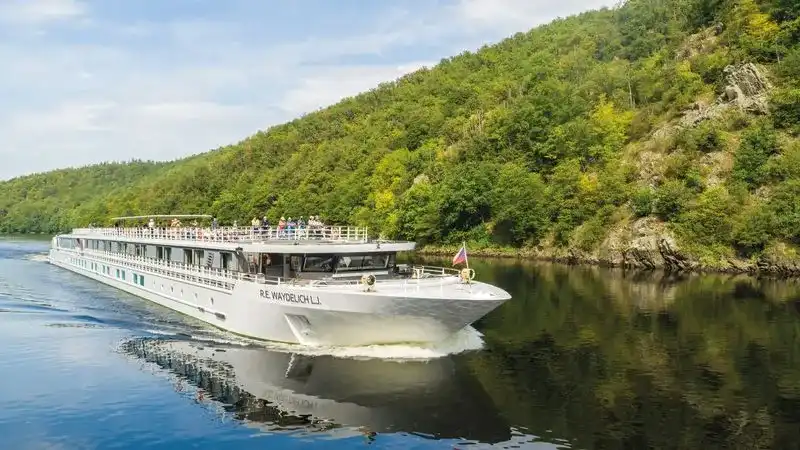
The Douro's Best-Kept Secret
Of all the rivers in the CroisiEurope portfolio, the Douro in Portugal is the one that most consistently exceeds expectations. Travellers who book it as a second or third river cruise after the Danube and Rhine invariably report it as the most memorable. This is not an accident. The Douro has qualities that the more famous rivers don't, and they're worth understanding before you book.
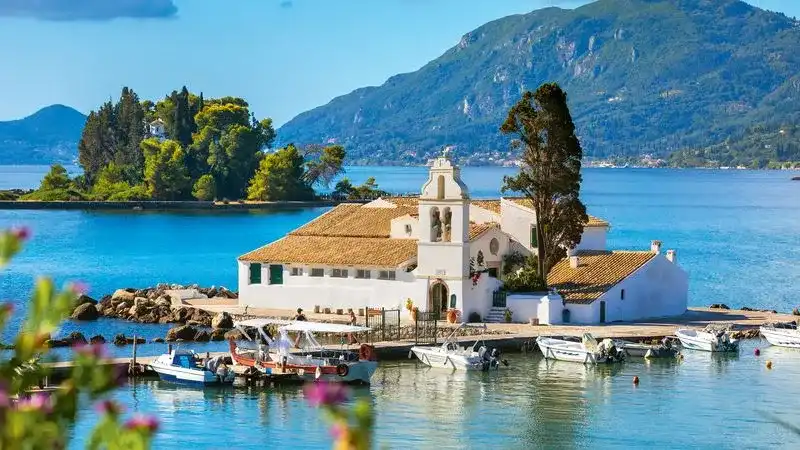
The Secret: No Roads
For much of the Douro's upper navigable stretch the UNESCO World Heritage section between Régua and Barca d'Alva there is no road running alongside the river. The road climbs up to the ridgelines of the valley, far above the river, while the river bottom is accessible only by boat or on foot. This means that when you're on a CroisiEurope Douro ship, you are often entirely alone on the water. No road traffic, no other ships in sight, no noise except the river itself and the birds on the terraced banks above you. This is a level of solitude and nature immersion that the Rhine and Danube with their barge traffic, motorway bridges, and industrial port infrastructure cannot offer.
The Landscape: Terraces Carved by Two Millennia
The Douro Valley's vineyards are among the oldest continuously cultivated agricultural landscapes in the world. The Romans planted the first vines here; the British port wine trade formalised the commerce in the 17th century; the demarcated Douro region (the world's first legally protected wine region, established 1756) formalised the geography. The terraces themselves carved from sheer schist rock at up to 45-degree gradients, accessible only by hand are an extraordinary feat of pre-industrial agriculture. UNESCO recognised this in 2001.
The Wine: More Than Port
Australian travellers often know the Douro only through port wine the fortified dessert wine produced from grapes grown on these same steep slopes. What they discover on a Douro cruise is that the valley produces outstanding unfortified table wines (Douro Reds from Touriga Nacional and Tinta Roriz; crisp white Douro wines from Rabigato and Viosinho) alongside the port. A full day at a quinta (wine estate), tasting through the range from white to tawny port, is one of the finest wine experiences in the world.
The Cities: Porto Alone Justifies the Trip
Porto is one of Europe's most extraordinary cities and one of the least visited by Australians, which makes it feel genuinely undiscovered. The UNESCO World Heritage historic centre (Ribeira) sits directly on the Douro; the port wine lodges of Vila Nova de Gaia are directly across the river (connected by the Dom Luís I bridge one of Europe's great iron bridges). The food is extraordinary: francesinha sandwiches, fresh Atlantic seafood, and the pastel de nata (custard tart) culture that Portugal does better than anywhere.
The Best-Kept Secret: Salamanca
Several CroisiEurope Douro itineraries include an excursion to Salamanca the Spanish university city just across the Portuguese border, with one of the most spectacular central plazas in Europe (the Plaza Mayor) and a University whose architecture rivals Oxford or Bologna. Salamanca is virtually unknown to Australian travellers and is, in this author's opinion, one of the great European cities.
When to Go: Harvest Season Is the Answer
September and October transform the Douro Valley the vineyards turn gold, red, and amber; the harvest (vindima) begins in the first week of September; the quintas are in full production. The scent of fermenting grapes fills the valley. This is when the Douro is at its most beautiful, most alive, and most distinctively itself. Book harvest season dates early they sell out first.

Book Your 2027 River Cruise with CroisiEurope Australia
CroisiEurope Australia handles all bookings for Australian travellers local support, AUD pricing, no credit card surcharges on Visa or Mastercard.
Phone: 1300 739 652 | Email: contact@croisicruises.com
Website: www.croisieuroperivercruises.com.au | Office: Tweet World Travel, 544 Magill Road, Magill SA 5072
2027 Early Booking is open now. Enquire today.